HIGH AND LOW NY

Biographies

Home
Editorials
Books by Schoell/Books by Quirk
Biographies
Movies
TV Reviews
Classic Films
Links
Performance and Theater
Music
Opera Reviews
20th Century Opera
Soaps
Internet
Macabre Books
Macabre Movies
Comics
Hollywood Poop
Gay
Kate Hepburn
The Sundance Kid
Joan Crawford
Fantastic 4
TV: Alias
Fiction
Quirk's Hollywood Stars Photo Page
restaurants
Mailbag
Archives
For Sale
JATGAB blog
Superhero Comic Review
William Schoell Online
William Schoell's Web Journal

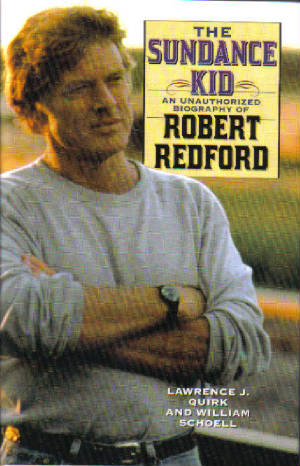
BRAND NEW REDFORD BIO FROM SCHOELL AND QUIRK
redfordcover.jpg
click here to order from barnes and noble online

Books

edgeofmidnight.jpg

EDGE OF MIDNIGHT: The Life of John Schlesinger. An Authorized Biography by William J. Mann. This excellent biography traces the life and career of director John Schlesinger from his childhood to his early days as an actor to his first directorial efforts and on to the big splash he made with Darling starring Julie Christie. Schlesinger really came into his own with the huge critical and financial success of Midnight Cowboy, a film which helped usher in a new era of frankness in Hollywood. Most of the director's later films were not quite as successful nor as feted. The book reveals that his superb film Sunday, Bloody Sunday was inspired by people and events from Schlesinger's own life, and documents his attempts to get back on top again while accepting screen assignments that may have been beneath him [some of which he championed nevertheless]. Written with the full cooperation of Schlesinger and his lover, the book is bolstered with many interviews from the people who knew the subject best. While looking into Schlesinger's attitude toward his homosexuality, Mann also analyzes the strengths and weaknesses of Schlesinger's films, explaining why some were better received and better made than others. A compelling and worthwhile biography of a director who may have been more influential than people realize. The book will make you want to go out and look at DVDs of the director's many features. William Schoell.

donovanautobio.jpg

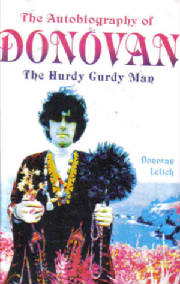
THE HURDY GURDY MAN: The Autobiography of Donovan. Donovan Leitch. Donovan was a popular folk-rock singer of the sixties who – according to him – “dropped out” of commercial show biz when he was only twenty-four. Obviously feeling that his contributions to music have been overlooked, and he himself under-appreciated, he tries to set the record straight in this autobiography. Donovan tries hard to create a certain mystique of outsider, rebel and non-conformist -- “leaving home” at sixteen [he actually simply went off for a summer of frolic the way many teens do] – when he's really a reasonably talented poet and composer who became famous at the obscenely early age of eighteen. He never addresses the fact that his multi-millionaire status was hard to reconcile with his role as the originator of “flower power.” This is a book less interested in truth than it is in explaining Donovan's greatness, which he does on every other page, citing artists whose work was heavily influenced by his own. The funny thing is, Donovan may well be right about his influence, but he should have let somebody else say it – again and again and again. Along the way we learn how much of his music was influenced by his love for the woman he eventually married. We learn of numerous affairs, his disillusionment with the music scene, what an insensitive jerk he could be in a rare and surprising moment of candor and self-analysis, and his rather dopey conversion to Yoga. Donovan writes well, but the book is weakened by his need to constantly reaffirm his importance. Although he includes photos and brief mentions of his four children, he never tells us anything about them. For instance, he never mentions, or expresses pride in, his son Donovan Leitch's considerable acting ability. But then, people who become famous at eighteen often grow up with a very warped set of values – and a sense of Themselves Over All. William Schoell.
tabhunterbook.jpg

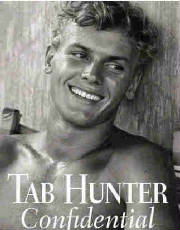
TAB HUNTER CONFIDENTIAL. Tab Hunter and Eddie Muller. Algonquin Books.

Once a movie star, always a movie star – and is there anything on earth more self-absorbed than a movie star? Tab Hunter tells how a great-looking guy with absolutely no acting experience managed to become fading star Linda Darnell's leading man in one of her last pictures, and then moved onward and upward to become a movie star in his own right, appearing in such films as Damn Yankees and The Pleasure of His Company. He doesn't gloss over how he quickly descended to the depths as a Hollywood has-been, then made a comeback of sorts by co-starring with Divine in two funny movies. Hunter's story is reasonably absorbing and somewhat enlightening about Hollywood, but what it mostly does is remind us of the shallowness of movie stars – all movie stars. Not being normal people, they just don't get it. For instance, on one page Hunter [or rather his co-author] writes how disappointed he was that his then-agent Henry Willson wasn't behind him more when he tested for an important role. He complains that Willson didn't care if he got the role as long as it was one of his many clients. So much for loyalty Hunter complains, or words to that effect. What did Hunter expect Willson to do – focus only on him and to hell with all of his other clients!!! It just doesn't occur to Hunter how hypocritical he sounds. Considering that he's out of the closet – a decision that may have had more to do with the fact that his sexual orientation was pretty much an open secret as opposed to true self-acceptance on his part -- Hunter refers to certain people he dislikes as “fags” a lot more often than he should. But then, Hunter comes across as moderately likable but not especially bright. This is by no means an essential read but many people will find it absorbing. William Schoell
bushfamily.jpg

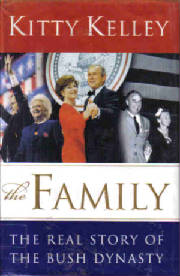
THE FAMILY: THE REAL STORY OF THE BUSH DYNASTY. Kitty Kelley. Random House; 2004.

“His religiosity allowed him to live in a black-and-white world of absolutes with no bedeviling in-betweens.” Thus Kelley writes of our current president, George W. Bush, in this fascinating look at the Bush political family from Senator Prescott Bush down to George H. W. Bush (“Poppy”) and way down to George W. Bush (“Dubya”): these last two better known as “Dumb and Dumber.” Surprisingly, this is not just a Bush-bashing extravaganza (although the family has given Kelley plenty of ammunition). Kelley relates how George H. W. Bush's father Prescott had more of a social conscience than either his son or grandson, both of whom radiate an air of entitlement. She gives credit where it's due to the two presidents, describing the father's sensitive nature and compassion (at least towards people of his class) and the rare – very rare-- good points of his son. Although both Bush presidents claim to be self-made men against all evidence to the contrary, Kelley exposes this hypocrisy and details how connections got both – especially Bush Jr. -- into the White House. This is by no means just a collection of gossip – Kelley explores the behind-the-scenes elements of political campaigning, in-fighting and betrayal with savvy and industrious insight. Kelley also examines the lives of the wives, children, siblings, cousins and so on, including arrogant screw-up Neil Bush. You'll also learn how Jeb Bush petitioned for the release of anti-Castro terrorist Orlando Bosch, who blew up a plane with 75 people aboard (including Cuban athletes), and how his father granted the terrorist U.S. residency! Kelley describes Barbara Bush not as a lovable grandma but an unpleasant frump who keeps grudges, snaps at people, and is just as uncultured as her husband and son. [Although Kelley seems to criticize Barbara Bush for saying that Washington D.C. mayor Marion Barry was a “disgrace,” no other word really describes the man.] The book goes into our current president's misspent youth when he majored in beer-drinking and making an ass of himself (he's given up the former but still does the latter), as well as his days as a cheerleader (he's not as athletic as his father was). [Kelley tells an anecdote about Bush confusing “tears” (of joy) with “tears” (a piece of paper) which is hilarious!]

The Family makes it clear that the Republican party has undergone a change-for-the-worse due to the influence of the religious right, which Republican candidates increasingly cater to – to the detriment of the nation. Kelley also examines sexuality and “manhood” and how it relates to the White House. While some of Kelley's sources, such as embittered, discarded wives and the like, may not be terribly reliable, most of the book is exhaustively researched, well-documented, and highly credible. A splendid, immensely readable book! -- William Schoell
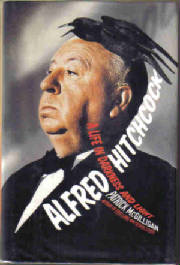
hitchcockbio.jpg

ALFRED HITCHCOCK A Life in Darkness and Light. Patrick McGilligan. Regan Books.

Although the portrait that emerges of Alfred Hitchcock is not entirely devoid of weird, negative aspects, this book is in a sense an “answer” to Donald Spoto's more “sinister” The Dark Side of Genius, which McGilligan frequently refers to. McGilligan's massive tome is a thorough, very readable, and well-researched look into the life of the “master of suspense,” in which the author attempts to put some of the more negative things written about the great filmmaker into context. Not that he's above getting into a little “gossip” -- there are details on Hitchcock's impotence, his wife Alma's possible affair with a young screenwriter, Ingrid Bergman supposedly trying to get Hitch into bed, and Hitchcock's relationship as surrogate father to Brigitte Auber, who appeared in To Catch a Thief. [Auber felt betrayed when Hitchcock made a pass at her and cut him completely out of her life. The fact that he tried to make up with her despite his undoubted mortification suggests that Hitchcock wasn't just interested in her sexually but genuinely cared for her. Auber comes off as extremely unsophisticated, naïve, and unforgiving.] We also learn more about Hitchcock's relationship with 'Tippi' Hedren, star of The Birds and the criminally under-rated Marnie. McGilligan provides fresh details about the making of Hitchcock's films, even ones that had extensive pre-production but never actually got before the cameras. This is all very compelling stuff for Hitchcock admirers, and will make you want to revisit his films as soon as you put the book down. There are some dumb moments, however. McGilligan suggests that some of Hitchcock's leading men failed to give “romantic” performances because they were homosexual (he never uses the term “gay” for some reason, giving the book a dated ambiance) -- but isn't that why they call it acting. He may not have been a great thespian, but Rock Hudson could certainly love up the women on the screen convincingly despite his sexual orientation. Perhaps the gentlemen McGilligan refers to may have been unconvincing as romantic leads not because they were gay but because they just weren't cut from that same sexy “lover boy” cloth as Hudson 

--William Schoell
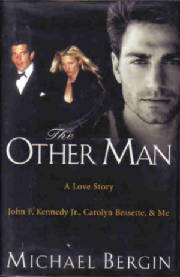
theotherman.jpg

THE OTHER MAN. Michael Bergin.
 
Michael Bergin is the well-known actor and Calvin Klein underwear model who was involved with Carolyn Bessette before (and after) she married John F. Kennedy Jr. His autobiography focuses on his relationship with Carolyn – this was probably dictated by the publisher – and offers interesting details of it, but it's too bad that this aspect crowds out the other fascinating elements of Bergin's life. The behind-the-scenes glimpses of the life of a male model and the cutthroat modeling industry are so compelling that you often wish Bergin had focused mostly on this and left the Bessette business for one chapter only. Bergin emerges as a likable, sympathetic (if somewhat humorless?) figure, however; someone who is not above seizing an opportunity when it presents itself (which is intelligent, of course) without necessarily being a “user.” On the other hand, like most people, Bergin doesn't always see the reality of his life clearly (or doesn't want to, again like most people). He writes about the pride his family had in seeing him posing in his underwear in a huge poster in Times Square without the slightest trace of irony. Later he wonders why Bessette ultimately chose JRK Jr. over him, even though he spells out what was going on at the time. While he and Bessette were dating, Bergin was living (platonically) with an older gay man who fell unrequitedly in love with him and was tormented by his feelings. Even after learning this, Bergin still didn't move out of the older man's apartment for some time. It doesn't seem to occur to him that Bessette might have wondered if he were bisexual. Or if he was only “using” her the way she could have thought he might have been “using” the older man (Bessette was instrumental in getting Bergin the high-profile job for Calvin Klein, after all). Again, Bergin doesn't really come off as a ruthless opportunist stereotype, but surely Bessette might have wondered how much he really cared for her? In any case, the book is a surprisingly good read. Bergin got a lot of criticism for coming out with the book, but look at it from his point of view. Everyone else and his brother was having his say not only about JFK Jr. and Carolyn but even about Bergin's relationship with her, so why shouldn't he, an actual participant, have had his say as well? Quite enjoyable and fast-paced and with lots of sexy pictures. Say what you will about his writing and his book, Bergin is a very hot guy. 

meandbobbyd.jpg

ME AND BOBBY D. A Memoir. Steve Karmen. Hal Leonard.

What happens to the people left behind – the old friends and co-workers -- when someone makes the big time in show business? Steve Karmen attempts to answer that question in this interesting memoir of his early friendship with the singer/actor Bobby Darin. This is by no means a biography of Darin, although the reader will gain some insight into the man's character, which was extremely career-driven (probably why he made it) and expedient at times, although Karmen relates examples of how Darin could also give credit when due and be extremely gracious to old pals. [Although in one obnoxious moment Darin tells Karmen that he is not to ask for anything from him and that “they travel on different levels.”] Most of the book relates a short-term engagement in Detroit where Darin was the solo act and Karmen his guitar and vocal accompanist. Encouraged by his agent, Darin eventually relegated Karmen to the side of the band and didn't allow him to sing any more back ups. Aware that Karmen was, ironically, taller and better-looking than he was, Darin may have allowed jealousy to get the better of him, although it is also true that it was Darin who had just cut a record and had an agent – not Karmen. Karmen split from Darin and had a brief try at his own recording/acting/club career, but eventually found success as the composer of such famous jingles as “I Love New York,” “This Bud's for You,” and many, many others. Perhaps too much of the book is devoted to Karmen's stumbling attempts to get laid in Detroit, which becomes tiresome and is described in long stretches of dialogue that go on for many pages as if he were writing a forgettable coming-of-age novel. [Karmen describes Darin as getting laid on a regular basis in Detroit, continuously coming back to their hotel room smeared with lipstick, even bedding a mobster's sexy girlfriend.] Much more interesting are the few pages describing his attempts to establish his own successful show biz career, which has that certain ring of pain and truth, Karmen being undone by bad breaks and agents without enough clout. He describes the combination of fascination, envy, and anguish he felt while watching Darin's club act and feature films. Although the book is not without flaws, Me and Bobby D. is a reasonably affecting look at show biz survivors and casualties and how they prosper, adapt, and make do. Throughout the book Karmen's love-hate for Darin clearly comes across. [On the back cover Connie Francis, who apparently loved Darin unconditionally, is quoted as saying “the experience of reading Me and Bobby D. brought closure from the heartache and emptiness I have lived with for over 40 years...”] -- William Schoell

bobbydarinbiostarr.jpg

BOBBY DARIN: A LIFE. Michael Seth Starr. Taylor. This is a workmanlike biography of Darin with some excellent interviews with, and insights from, people who worked with him and knew him well. Mercifully Starr doesn't spend too much time on Darin's childhood, and after a few pages takes us into the beginnings of his almost meteoric if short-lived show business career. Darin is essentially portrayed by Starr and others as a man driven to succeed at an early age because of a heart condition that would probably ensure him an early demise – as it did (at age thirty-seven). Of course, many young people with perfectly healthy hearts are driven to succeed – the sooner the better --- but his condition may have added a certain intensity to Darin's ambition. Darin could be prickly and cocky, which didn't endear him to some (Ed Sullivan was certainly no fan), but he eventually mellowed and won people over with his talent. Starr doesn't spend as much time on the ultimately shattered Darin-Sandra Dee marriage, which may disappoint those looking for juicy stories of marital combat, but he does adeptly describe his recording career, film roles, and critical and fan reaction to same. Interestingly enough, at one point Darin decided to almost “drop out,” sold all of his possessions, and moved as far away from everyone as he could get. Bobby Darin: A Life is a good bet for readers who are curious about Darin but don't necessarily want to read a thick tome on the performer; it gives all the basic facts of his life and is a quick read. -- William Schoell

carygrantbio.jpg

CARY GRANT. Marc Eliot. Harmony Books. 2004.
This is a readable if not especially revelatory look at the life of Cary Grant from his troubled early years in England, to his stage career in New York, to his highly successful film career, as well as his involvement with actor Randolph Scott and his four marriages to women. It seems pretty clear to the reader (if not necessarily to Eliot) that Grant was essentially a gay man who, while initially free-spirited and free-thinking and without any special qualms about his sexuality, spent his later years (once stardom came upon him during a much less tolerant period) running from his sexual identity, always eager to preserve his image and the career that gave him so many options, not the least of which was financial. Eliot makes some attempt to explore the man's complexity but despite some details of his long relationship with Scott is less successful keeping an honest tab on his true sexuality. Eliot is not a film historian – most of his previous books were on rock and folk music – so he recycles such ancient canards as John Gilbert not having a voice fit for sound pictures and he classifies Howard Hughes strictly as a heterosexual. At one point he writes that Shirley Temple “had set off a generation of middle-aged men into cold sweats while still a toddler”(!) His descriptions of Grant's looks, appeal and acting ability occasionally border on the poetic but sometimes veer into the pretentious. While the ultimate book on Cary Grant has yet to be written, this is not at all bad for readers who are unfamiliar with previous biographies of the actor.

garycooper.jpg

GARY COOPER: AMERICAN HERO. Jeffrey Meyers. William Morrow. 1998. This is a fine biography of the late actor from his beginnings in the silent film industry to his painful death by cancer many decades later. The portrait that emerges in this book is less of an American “hero” than a fairly conservative (if not rockbound) icon who lived life the way he wanted to (including numerous affairs which negatively affected his wife and daughter) then later regretted his actions and found Catholicism. Even Cooper didn't think he was much of an actor, although Meyers analyzes his distinct if limited abilities with aplomb, and several of his colleagues offer testament to his deceptive “genius.” Cooper was a star of extremely limited range, but he got better as he got older and played characters who were closer in line with the real Gary Cooper. His best performances were in High Noon, The Naked Edge (his final film), and Ten North Frederick, in which he played a middle-aged man in love with a much younger woman (a situation he was not exactly unfamiliar with). Meyers goes into Cooper's affair with Patricia Neal with depth, although some readers may wish for more details on other, less important affairs, not to mention his youthful relationships with actor Anderson Lawler and other gay males [or the true reasons for his hated of Cary Grant]. Meyers does not neglect Cooper's films, thank goodness, and perceptively examines both their strengths and weaknesses and how and whether or not they advanced Cooper's art. Meyers also goes into Ernest Hemingway's friendship with, and jealousy, of, the handsome actor, as well as Cooper's relationship with HUAC. This is an intelligent, well-written biography.

Gonna Do Great Things: Life of Sammy Davis

In Black and White: The Life of Sammy Davis Jr. Wil Haygood. Knopf.
Gonna Do Great Things: The Life of Sammy Davis Jr. Gary Fishgall. Scribner.
 
Sammy Davis Jr. was far more than just one fifth of “The Rat Pack,” which both of these fine biographies make clear. Starting as a child in the days of vaudeville he worked his way up to become a top club entertainer, Broadway star, movie actor, and TV host. While he was more successful at some things than at others, he always gave 200% and was a literal bundle of talent. Sammy could sing, emote, play the drums, dance (including classic tap-dancing), and do dead-on impressions of a host of celebrities (not just saying the lines most associated with them but singing). These books both detail Sammy's hungry early years when he traveled with his father and “uncle” as part of the Will Mastin Trio. His relationship with Frank Sinatra is analyzed, as well as his relationships with JFK (a bitter disappointment) and Richard Nixon (a bitter disillusionment). Both books do an excellent job of unveiling the demons that drove Sammy, and why he made the decisions – and many mistakes – that he did. His affect on and interaction with the black civil rights movement and its leaders also comes in for scrutiny. Haygood's book perhaps places its subject more in the context of the times as they pertained to black Americans, providing some fascinating details about the attitudes of and toward black Americans during the different periods of Sammy's career. On the other hand, Fishgall provides much more information on Sammy's army career, making the point that in all likelihood he would have been segregated from white soldiers and many of the things he wrote about his Army experiences in his memoirs have to be taken with a grain of salt. Haygood provides a highly interesting look at the writing of said memoirs, “Yes I Can,” although he seems to take Sammy's clearly ghost-written book Hollywood in a Suitcase at face value (Fishgall reveals that the book was actually written by Simon Regan). Sammy was a fascinating, influential character with a fascinating life. These books are both recommended for adult readers.

-- William Schoell. (Schoell is the author of a young adult biography of Sammy Davis Jr, I Can Do Anything, which is a good bet for teenaged readers. Click on the photo below to order a copy.

click here to order bio of Sammy for teenagers
Biographies of Sammy Davis Jr.
Sammy Davis Jr. -- one of the all time great entertainers!
Mailbox, Spinning

Please pardon our appearance as we revamp this web site. A change in format has created some lay out and photo problems which we will correct as soon as possible. Many thanks for your patience. -- The Editors
 
 
IF YOU HAVE QUESTIONS OR COMMENTS OR WOULD LIKE TO BE ADDED TO OUR MAILING LIST PLEASE EMAIL US AT highandlowny@earthlink.net

NOTE: press "home" on your keyboard to go straight back up to the top
 
HIGH AND LOW NY: THE PERFORMING ARTS AND ENTERTAINMENT NEWSLETTER
 
Entire contents copyrighted 2004 - 2005 by William Schoell and Lawrence J. Quirk, except for items written by other authors, in which case said authors retain the copyright of their work . Opinions expressed by individual authors and reviewers are not necessarily the opinions of High and Low NY.